Technology has granted the KZN Department of Education an opportunity to offer more learners access to learning resources in literally just a click of a button
The KwaZulu-Natal Department of Education is rolling out e-library solutions to all schools in the province with teachers and librarians getting trained to ensure that the life-changing initiative takes off.
The solution seeks to enhance reading among learners in public schools by ensuring that they are able to access reading material electronically.
Physical libraries have for many years played a key role in learning including serving a role in preserving and keeping books and periodicals.
However, as the world rapidly evolves with technology taking over almost all aspects of human lives, these advancements have also expanded to teaching and learning.
Technology has now granted the KZN Department of Education an opportunity to offer more leaners access to learning resources in just a click of a button in an exciting manner.
The province launched the e-library platform in April this year with training for librarians and teachers commencing in June. The initiative is now being rolled out in a total of 650 schools in all 12 districts of the province with 100 schools getting three laptops each.
This game-changing e-library platform initiative will be expanded every year in the next five years with some schools receiving equipment which include tablets, Wi-Fi routers, computers and overhead projectors to be able to fully roll-out the programme.
Modern Learning
Reluctant and struggling readers will benefit the most from e-Books that often give students a full and enhanced reading experience through the use of among others animations, sound effects, and relevant imagery. This helps in keeping a reader continuously engaged throughout.
Love for both Digital and Print
E-book collections are not meant to replace physical books, but to aid in the love of reading and learning. Digital libraries give teachers powerful tools to teach students how to find, evaluate, and use digital content. This is a very critical skill for 21st-century learners. Digital texts incorporate multimedia which enhances reading comprehension and literacy skills.
Building Skills and increasing access
Listening to books read aloud on a device, laptop or computer is one of the single most important activities for reading success. Not only do children love being read aloud to, but it provides students with a demonstration of reading comprehension skills.
E-books can among others help to save time, money, and storage. Not only does a digital library make books more accessible to students and educators, but the convenience factors of downloading and returning e-books are a significant advantage for students. Digital libraries cost far less than physical books, allowing librarians to stock up on a variety of titles without requiring additional storage space or being forced to clear space for the new additions.
Supporting English second language speakers
Students with English as their second language, which are in the majority in the province of KwaZulu-Natal can utilise tools like the built-in dictionary in e-books. Readers can quickly look up unfamiliar words, while the recorded audio can provide auditory models of the correct syntax and grammar for the English language. The digital library collection has resources in IsiZulu and many home languages of KwaZulu- Natal, Teacher Resources as well as thousands of free e-books.
Aiding in Reading Comprehension and Increasing Literacy Rates
Students can express ideas, opinions, ask questions, and create discussions using highlight or underlining tools. This means they can identify story elements, plot, main ideas, and supporting details within the text, annotating as they go. The level of interaction contributes to reading comprehension. E-books are very engaging. They spark interest even in reluctant and struggling readers. Students apply reading comprehension skills and read more difficult texts when using digital libraries and this leads to higher literacy levels something which the province would like to achieve.
Enhancing Classroom Libraries
Classrooms can benefit from a digital book collection. When e-books are accessible, educators are no longer limited to a few titles with only twenty or so copies available. Classrooms libraries can become more robust to incorporate more creative projects and activities to help students engage with the text. Books, e-books, magazines, graphic novels—these are all tools for the librarian to help individuals fall in love with reading. Digital library collections give librarians more time to focus on students and programs because they are not held up in the process of re-shelving books.
The e-library solution has an on-line and off- line capabilities to allow all schools access irrespective of their infrastructure challenges.
E-library Training
Teacher training and development is at the forefront of the launching and implementing the e-library platform in the province. Below is the planned rollout of the e-library platform in the schools over the first five years:
- Year 1 – 650 schools
- Year 2 – 1200 schools
- Year 3 – 1450 schools
- Year 4 – 1450 schools
- Year 5 – 1450 schools
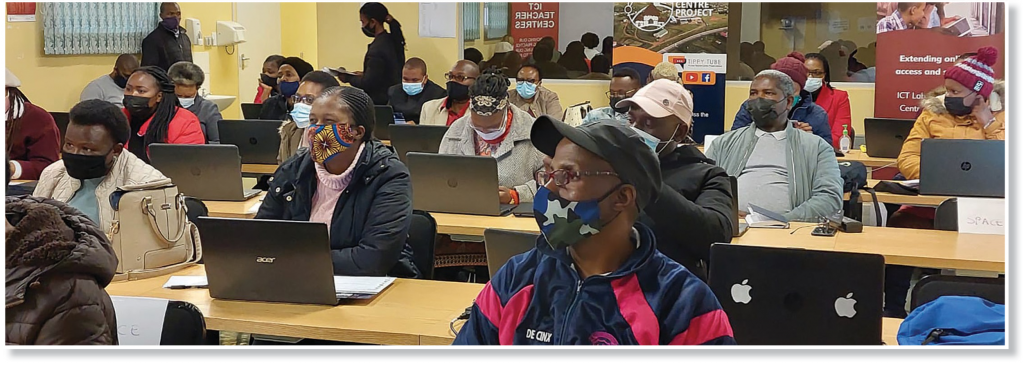
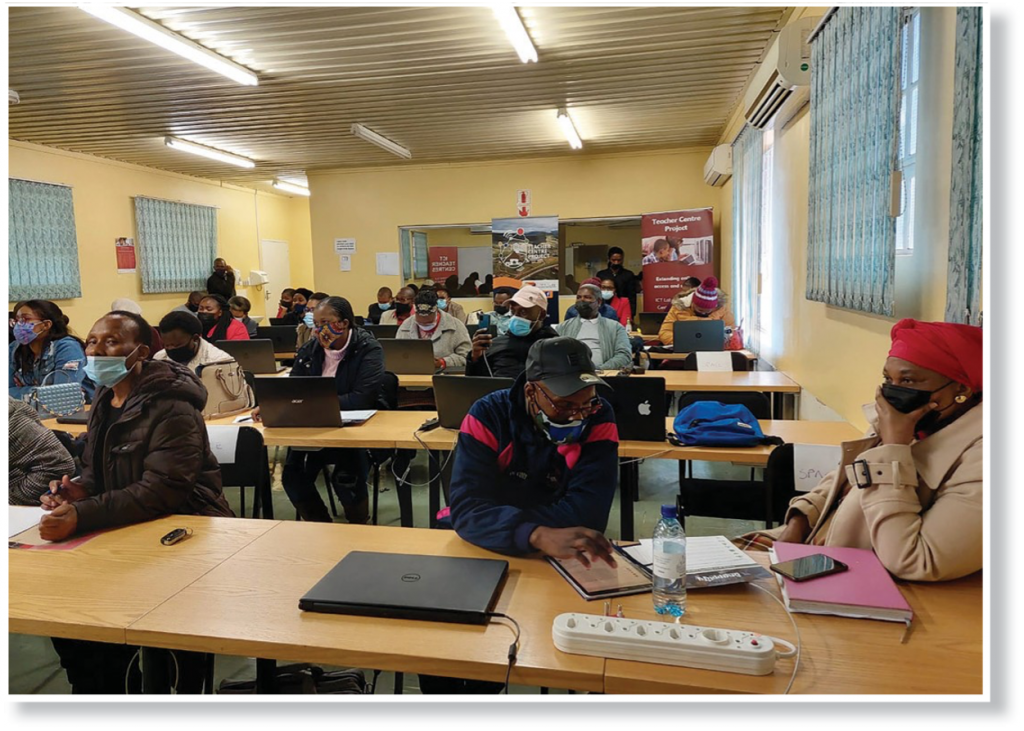
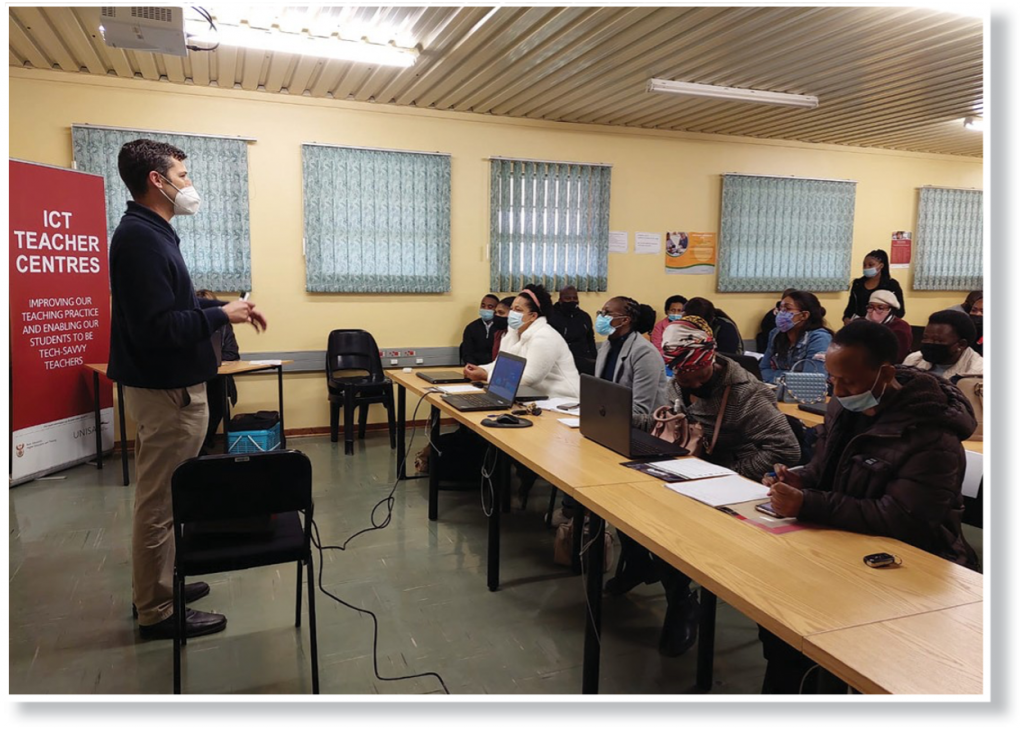
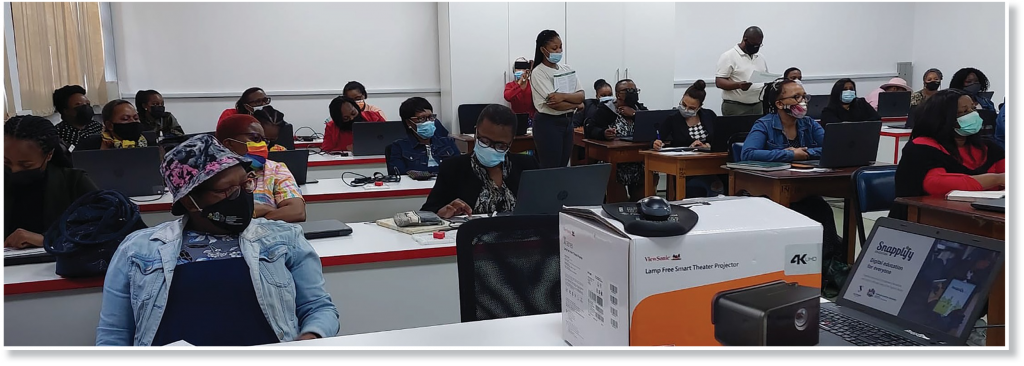
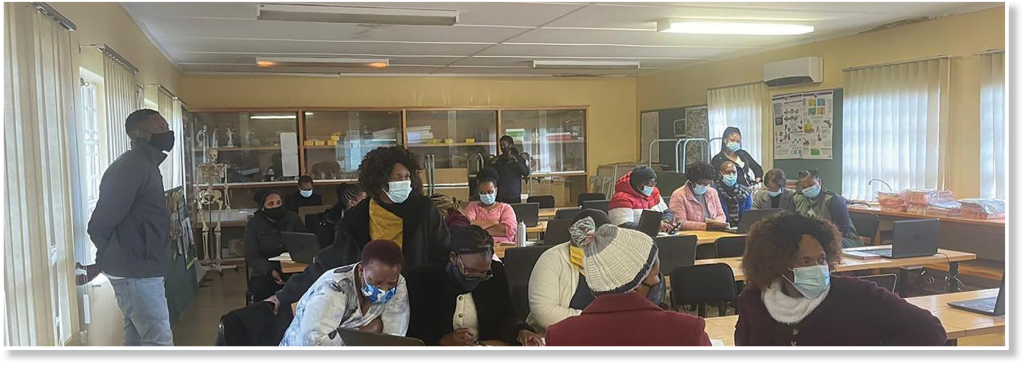
The Teachers and Librarians are currently getting training and support from their respective District Officials and e-library IT experts, to fully manage the utilization of e-library platform.
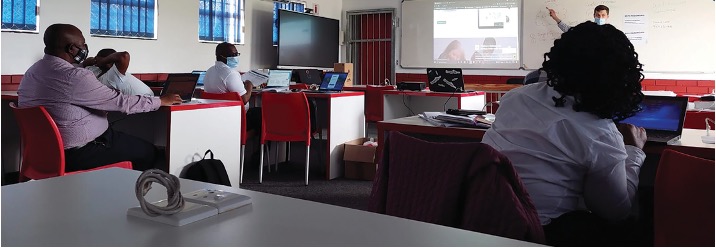
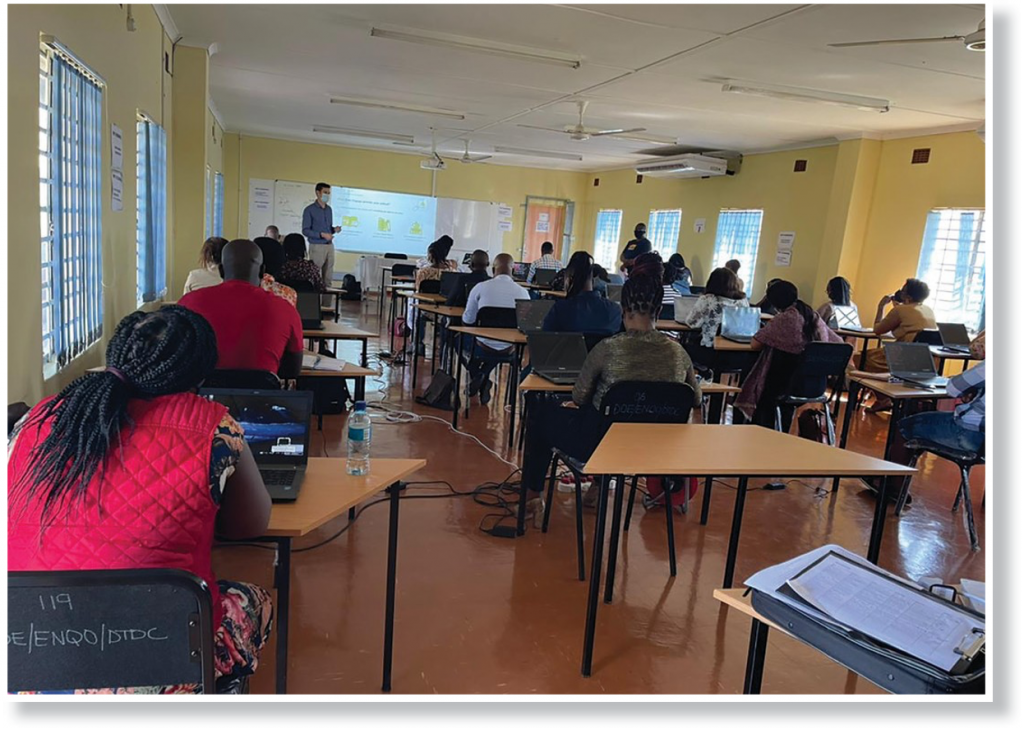
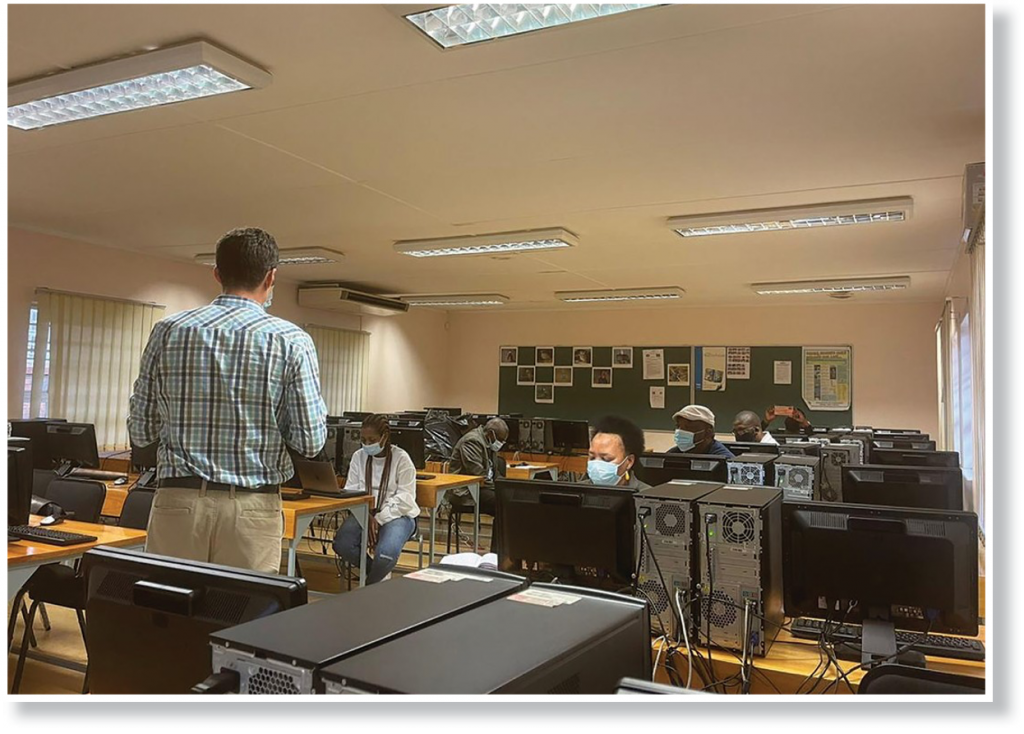
Harry Gwala/ Umgungundlovu/ Ugu Officials Training